
My Research Philosophy
As an engineering education researcher and a scholar, my work is guided by my desire to make positive changes within the culture and field of biomedical engineering. I firmly believe in a scholar-activist approach to my work, and I see my research as a partnership between myself and the students I study as we co-construct knowledge and collaborate to create meaningful change at the institutional level and beyond. To me, rigorous and meticulous research is a necessary tool, that when applied correctly, can be used to create informed and impactful changes to both engineering culture and curriculum. As a faculty member, my focus will be using my research to create targeted interventions, develop faculty trainings, and push for best practices within the engineering curriculum to empower students – particularly marginalized ones – to persist and thrive.
How Instructors Convey Spatialized Information in the Civil Engineering Classroom
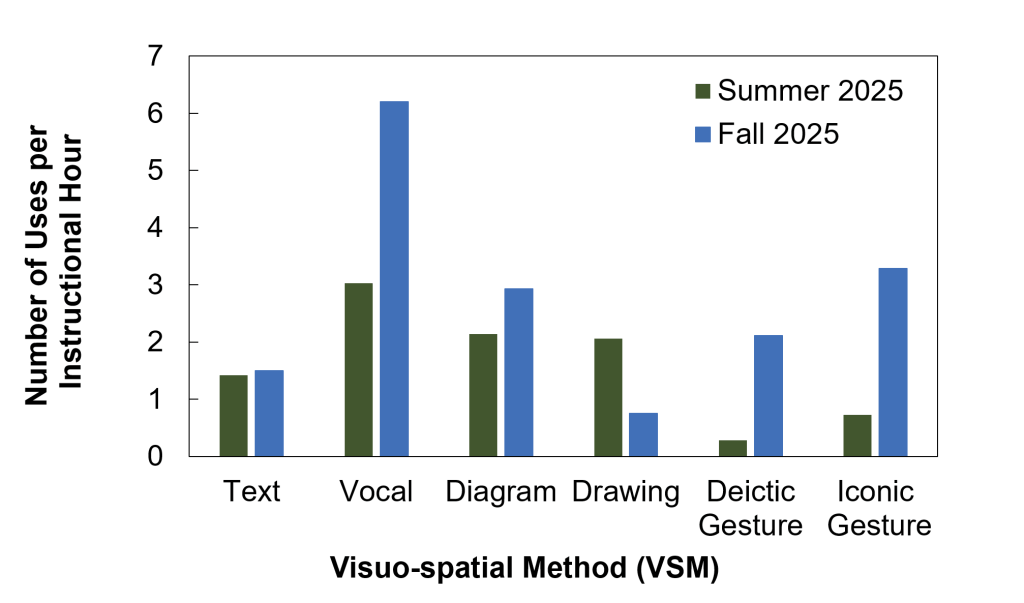
As a postdoctoral researcher, I have built my skillset on the research of teaching and learning in engineering. My current work focuses on how instructors convey complex visuo-spatial information within the undergraduate civil engineering classroom. Working with a graduate researcher, we have collected hundreds of unique observations across 10 civil engineering courses. I have applied both Sweller’s Cognitive Load Theory and Ainsworth’s Design, Function, and Task Framework to create a coding workflow to understand how instructor’s use of diagrams, gestures, and visual imagery impacts the cognitive demand on students. Emerging results demonstrate instructors frequently convey spatial information abstractly, contributing to student misunderstanding, and rarely utilize proven methods for conveying spatialized information – particularly physical and virtual models. Through this work, I have developed skills in conducting classroom observations, working with large qualitative datasets, and gained substantial knowledge on the literature base in student cognition and educational psychology. My work on this project involved the mentorship of one graduate research student and one summer REU student and resulted in two conference publications and a journal article in preparation.
QTPiE Emerging Scholars: Quantitative Analysis of LGBTQ+ Graduate Student Experiences
To gain additional expertise in quantitative methods, I was selected to participate in the Queer and Trans People in Education Emerging Scholars program in 2026. This summer training program focused on developing skills in critical quantitative methodologies through a hands-on research project. In this 10-week program, I gained experience in using both R and SPSS for quantitative analysis, including data organization and cleaning, running descriptive statistics and regression models, and developing more complex statistical models through exploratory factor analysis and decision tree modeling. My project focused on using the 2023 Graduate Student Experiences in Research Universities (GradSERU) dataset – which contains data from over 30,000 students at 15 research intensive universities – to understand how LGBTQ+ and disabled students’ relationships with their advisors and climate experiences impacted their academic career paths and wellness. For this, I have been developing a structural equation model relating advising and climate items to data collected on career pathways, wellness, and satisfaction. So far, this work has resulted in a submitted conference paper and a journal article in preparation
Experiences of LGBTQ+ Identifying Engineering Students
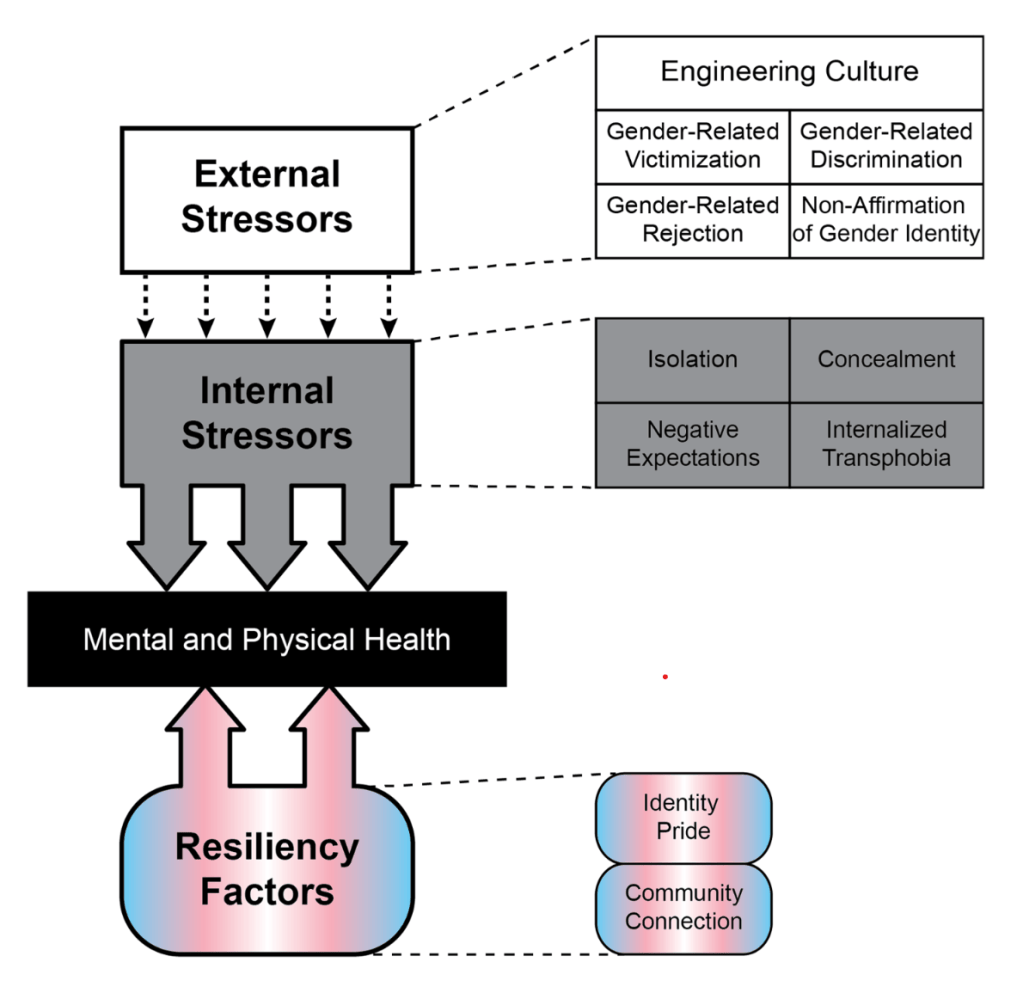
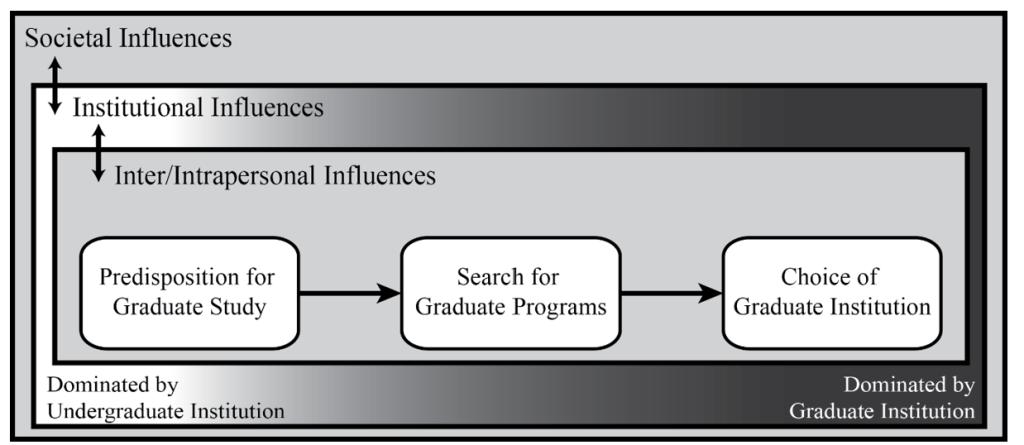
My dissertation work focused on understanding the experiences and pathways of LGBTQ+ engineering students at both the graduate and undergraduate level. In my work on queer undergraduate students, I found that students often define engineering professionalism as oppositional to their queer identities. This led students to seek welcoming spaces outside of engineering and resulted in students developing a nuanced strategy of selectively hiding their queer identity to remain safe . In my studies on queer graduate students, I found that queer identity significantly shaped student’s choice of graduate institution and relationship with their advisor and laboratory group. Using this, I developed a peer mentorship program, created recommendations for faculty to make their classrooms more comfortable for queer students, and suggested policy changes to make graduate engineering programs more welcoming to queer people. In this work, I gained experience in a variety of qualitative research methodologies and approaches, such as case study, ethnography, and narrative analysis. For data collection, I relied primarily on interviews and focus groups but have explored other data collection methods such as counterstory writing and educational journey mapping. I also utilized a variety of theoretical approaches, particularly those anchored in critical theory (e.g. Queer theory, Yosso’s Community Cultural Wealth framework, Revalo and Baber’s resistance framework) as well as theories rooted in student development and education (e.g. Meyer’s Minority Stress Theory, Perna’s Model of College Choice, Model of Multiple Dimensions of Identity). For this project, I was highly involved in the management of research funding and logistics. I contributed to writing the successful NSF grant proposal (EEC-2051502), managed Institutional Review Board protocols and amendments, completed grant annual reviews, managed annual advisory board meetings, and hired and mentored 6 undergraduate research assistants. This work has resulted in 5 published journal articles (including 2 first authored articles), 1 journal article in review, 2 journal articles in preparation, 5 conference publications, 3 conference panels, and a book chapter.
Thermosensitive Liposome Synthesis for Treatment of NF2

Using Focused Ultrasound to locally heat target tissue and trigger release from thermosensitive liposomes. Ultrasound is focused on the region of tumor growth, heating the tissue to 42°C. When liposomes in circulation reach this heated region drug release is triggered.

Reverse Phase Evaporation. 1. The lipids being used are dissolved in chloroform, and aqueous buffer with the therapeutic are combined, and immiscible. 2. Sonication creates a water-in-oil emulsion, with the lipids forming inverted micelles to support the emulsion. 3. The organic solvent is then removed via rotary evaporation, resulting in a final aqueous solution with liposomes. 4. The liposome products are dialyzed to remove any unencapsulated drug molecules, leaving only fully loaded liposomes

